


If you have a Pinterest business account but aren’t getting impressions, saves, or outbound clicks, chances are it’s not due to a lack of effort; it’s that Pinterest doesn’t understand what your content is about or who it’s for.
This is why it’s essential that you use keywords for Pinterest growth. Keywords are the foundation of a strong Pinterest account. They are the thing everything else – your boards, pins, and profile, is built on.
An organic Pinterest strategy that is rooted in keywords is what lets your content keep working for you while you are off enjoying the white space in your calendar, or focusing on the heart work of your business.
In this Pinterest keyword guide you’ll learn:
- What keywords are
- Why keywords matter
- Where to find keywords
- The exact places keywords belong
What are Keywords?
The term “keyword” is just a fancy way of talking about the words that a user would type into Pinterest to search for answers, inspiration, or ideas. Essentially, these words tell Pinterest what your content is about and who it is for.
Pinterest keywords should be descriptive, tailored towards your ideal client or customer, and should answer the question, “What is my target audience searching for?”
Why do Keywords Matter for Pinterest?
Many people make the mistake of treating Pinterest like a social media platform, when it actually is a search engine, like Google. This means that Pinterest uses keywords to categorize your profile, boards, and pins so that it can push your content out to the right audience (AKA your ideal client or customer).
Pinterest keywords matter because they create a better user experience and ultimately lead someone to save content or make a purchase.
The ideal Pinterest journey looks like this:
A user types in a keyword ➡️ Pinterest shows pins ranking for that keyword ➡️ the user clicks a related pin ➡️ the user saves that pin ➡️ the user clicks through to the URL to learn more
If someone types in “kindergarten emotion activities,” they expect to find pins related to that search term. And if they click a related pin they expect to be taken to a blog post or product about emotions activities for kindergarteners, not upper elementary math activities.
If you aren’t using the right keywords in the right places, Pinterest won’t push your content out, and ultimately it won’t rank in search.
Where Do I Find Keywords for Pinterest?
The best place to find keywords for Pinterest is on Pinterest (yes, it really is that simple)! Since Pinterest is a search engine platform, it can be used to find the best keywords that your target audience is searching for.
My favorite places to find keywords on Pinterest include:
Pinterest search bar
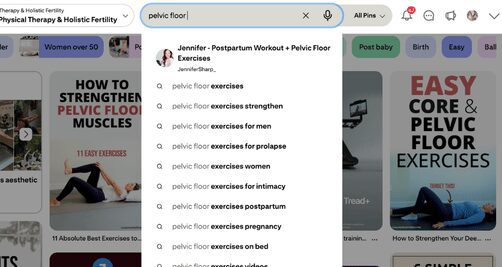
This may seem like a no-brainer, because it is! The first place I always search for Keywords is the Pinterest search bar. I recommend starting with a broad term or phrase that your client or customer may type in for a related topic, and see what results Pinterest shows you.
Keyword bubbles
Pinterest keyword bubbles are the little bubbles that show up under the Pinterest search bar after you hit enter. These are great descriptive words that I recommend using in pin descriptions, to tell the reader in more detail what they will find when they click through to that pin’s URL.

Related search
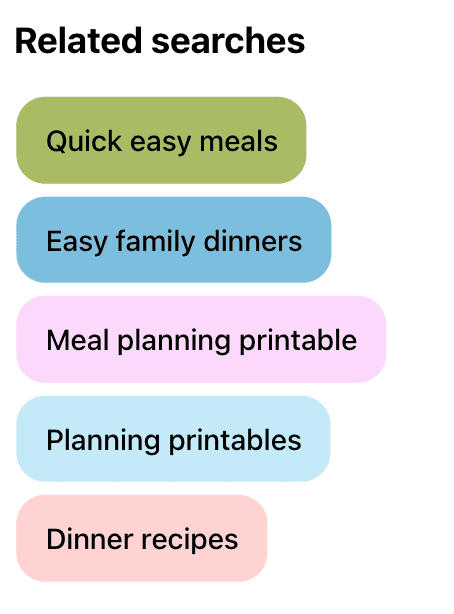
After searching for a specific keyword, Pinterest will show you related searches when you scroll through your search feed. These can be a great place to click through and see what other terms Pinterest relates to your search term that you may not have thought of.
Pinterest trends
Pinterest trends is Pinterest’s native keyword tool that can highlight:
- Growing trends
- Seasonal trends
- Top monthly trends
- Top yearly trends
If you are pinning a lot of seasonal content, Pinterest trends can be a great tool to use because it can show you what seasonal keywords people have searched for in the past and are likely to have high search volume during that upcoming season.
The key to using Pinterest trends effectively for seasonal content is to make sure you are doing seasonal keyword research at least 3-4 months ahead of the season.
Are there other Pinterest keyword tools?
There are other Pinterest keyword tools, many paid, that you could use to find keywords; however, it isn’t necessary to be successful on Pinterest.
The only paid keyword tool that I use is Keywords Everywhere, which shows me the average search volume per month for specific keywords as well as more detailed analytics for individual pins.
How do I know what keywords to use?
Knowing the right keywords to use on Pinterest takes understanding what your ideal client or customer is searching for, and knowledge of Pinterest strategy.
Ultimately, the goal is to choose words that match your target audiences’ search intent and that have a high enough search volume to gain interest, but aren’t so high that your pin doesn’t stand a chance of ranking in search results.
When choosing a main keyword to target for a specific URL, I recommend finding a short-tail keyword that is 1-3 words in length. Long-tail keywords (phrases that are 4+ words in length) can be used in pin descriptions, but often don’t have enough search volume to rank well as main keywords.
7 Places to Put Keywords on Pinterest
Pinterest searches specific areas for keywords. For a well-optimized Pinterest account, keywords should be strategically placed in the following places.
1. Pin Title
Your pin title tells Pinterest exactly what your content is about, so you want to be specific! The easiest way to do this is to think about what your target audience would type into the search bar.
For example, instead of something vague like “School Counseling Activities,” be more descriptive and use a title like “Kindergarten Feelings Chart and Emotions Activities.”
2. Pin Description
Your pin description is where you give Pinterest and the reader more details about your content, while naturally adding in secondary keywords. Old Pinterest strategy used to rely on using hashtags with keywords, but now Pinterest prioritizes content that is written with the user in mind.
3. Pin Image File Name
This is an easy place to miss! Pinterest scrapes your image file names for keywords, so I always suggest adding in the main keyword you are targeting as the image file name. For example, if my main keyword is “emotions activities,” I would title the PNG emotions-activities.png.
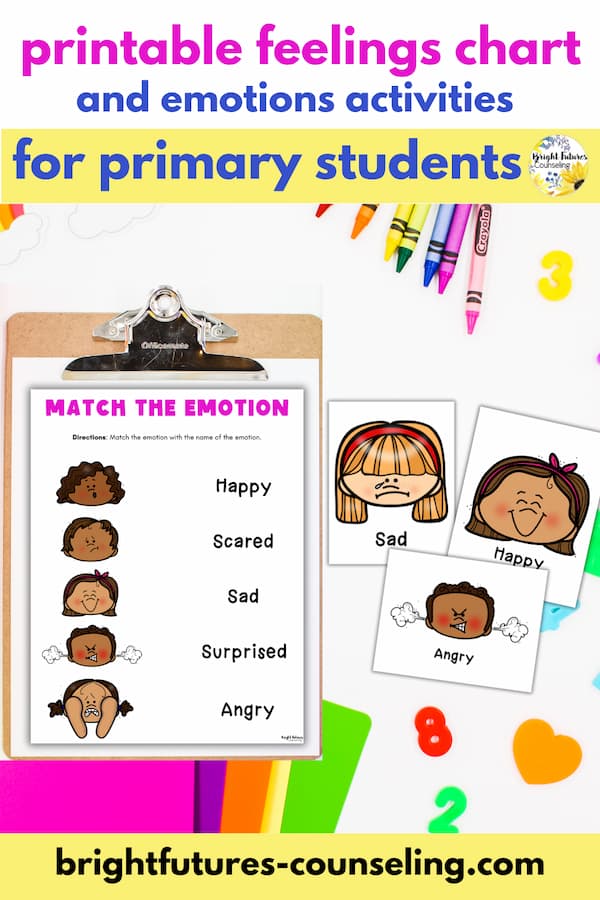
4. Pin Text Overlay
While you won’t always have text overlay on Pins, when you do, it’s nice to be descriptive and use Pinterest keywords that tie into the pin title and description.
5. Board Title
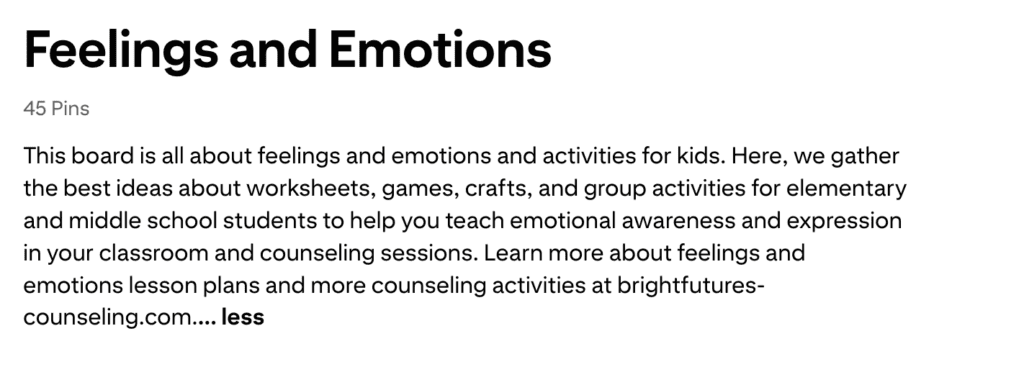
Your Pinterest boards are like Pinterest’s filing system, and if they aren’t optimized, your content is harder to find. Use short-tail keywords for your board titles and create a mix of boards with broad keywords, more specific keywords, and seasonal keywords, when applicable.
6. Board Description
Your board description tells the user exactly what they will find in that board. It also gives Pinterest more descriptive information that the algorithm uses to categorize your content.
When writing keyword-rich board descriptions, incorporate secondary keywords naturally, without keyword stuffing.
This is an example of a board title and description I wrote for a Pinterest client who has a school counseling shop. Her board title uses a broad short-tail keyword, and her description includes descriptive secondary keywords that tell Pinterest and the reader exactly what they will find in that board.
7. Your Pinterest Profile Name and Bio
This is where the main keywords that represent your business niche should be. These keywords should tell your audience exactly what they will find on your profile.
The strategy here is to be selective so your profile is unique and not the same as other business accounts. If location plays a big role in your business, you may want to include location-specific keywords in your profile name and bio.
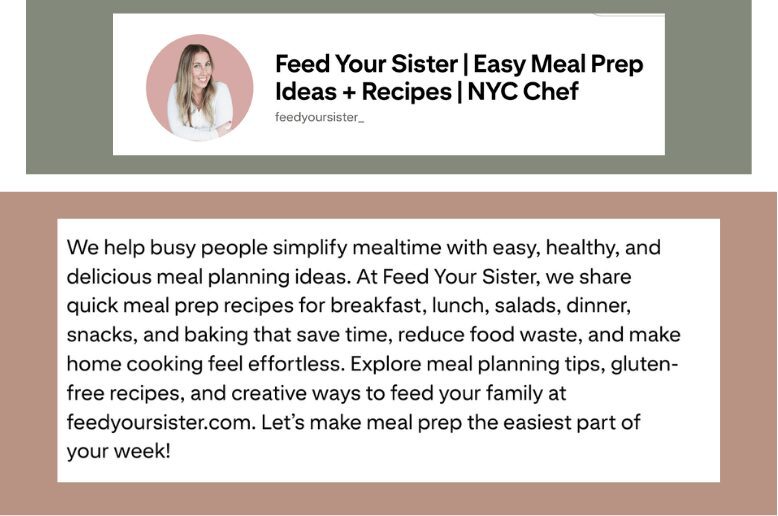
This is an example of the Pinterest Profile name I wrote for one of my clients. Rather than simply saying “pelvic floor physical therapist,” I included her business name and “holistic fertility” since that is a secondary service she offers. You can read her full Pinterest case study here!

This is another example where we chose to use a location-specific keyword since she offers specific in-person meal prep services.
When Your Keywords are Working, Pinterest Works for You
When your boards, pins, and profile all speak the language your ideal client is already searching for, Pinterest stops guessing what your content is about and starts pushing it out toward the right people while you’re offline, off the clock, and present in your life.
Buuuttt knowing how keywords work and having the time to research them, implement them across every board and pin, and keep them current are two very different things. Keyword strategy isn’t a one-and-done task; it’s an ongoing practice, and it’s usually the first thing to get pushed to the back burner when you’re busy running the rest of your business.
That’s where I come in!
Hi, I’m Haley — a Pinterest and SEO strategist who helps female entrepreneurs get found through organic search, without the pressure to show up and post every single day. I believe your visibility shouldn’t depend on the algorithm’s mood or your willingness to hustle. It should be built on a foundation strong enough to keep working while you focus on the heart work only you can do.
If you’re ready to put your keywords to work, there are two ways I can help:
One-time account audit + SEO — Perfect if you’re the DIY type who just needs a clear roadmap. I’ll dig into your account, tighten your keyword strategy from profile to pins, and implement best SEO practices so you have a strong foundation.
Full-service Pinterest management — For when you’d rather hand it off entirely. I’ll take the strategy, the keywords, and the ongoing pinning off your plate completely, so your Pinterest keeps growing without adding one more thing to your to-do list.


