


If you’re doing all the right things online and still feel invisible, you may need to pivot into an organic marketing strategy that keeps working after you close the laptop.
Because in a world that prioritizes constant hustle and instant gratification, it can feel so frustrating when your Instagram reels aren’t going viral, and the carousel you spent hours creating barely gets any engagement (trust me, I’ve been there too).
My client Elia, a meal prep coach and in-home personal chef, knew that feeling well. Her heart was with the families she cooked for, not with learning Pinterest strategy or SEO. This case study details the nine months we spent building an organic marketing strategy through Pinterest and SEO blogs, so that she could focus her creative energy on her meal prep programs and spend her newfound free time living her best life in NYC (without having to post on Instagram to get traffic to her website).
Meet Elia
Elia, founder of Feed Your Sister, is a meal prep coach and in-home personal chef based in New York City. Her mission is to break down the barriers around meal prep, teaching people the kind of real-life skills that make it feel doable instead of overwhelming. She meets people where they actually are and helps meal prep fit their real life (messy kitchens and schedules included).
Where the Partnership Started
All of my client partnerships begin with a discovery call, where I get to hear about your business goals, areas that you’re looking for support with, and you get to ask me questions. As Elia and I chatted on her discovery call, it was apparent that her main business goal was bringing more organic traffic to her website, without having to create Instagram content all the time.
Elia already had a backlog of blogs worth reading, a full meal prep course, in-person chef service offerings, and additional digital products. She also had a Pinterest account that she had occasionally pinned to when she published a new blog.
What she didn’t have was a clear or consistent strategy to help the right people find her content through Google and Pinterest.
And like a lot of the business owners I work with, her heart work was with her clients, the families she cooked for and taught. She didn’t have the time to learn Pinterest strategy from scratch or dig into SEO blogging on top of running her business, and she didn’t want being visible to mean being online all day.
She just wanted her content to reach the right people without her having to chase it down. Is that too much to ask?
No, it’s not! So we built her an organic marketing strategy that could do the reaching for her.
The Pinterest Foundation
Since Elia already had a Pinterest account, we weren’t starting from scratch. Instead, I started by auditing and optimizing her current Pinterest business account for SEO, laying a strong foundation so that Pinterest could categorize her content and push it out to the right people (meaning her ideal meal prep clients).
This Pinterest account audit and optimization phase included:
- Keyword and interest-targeted research
- A keyword-rich profile header and bio
- Optimizing some of her current boards with keywords and creating new SEO boards
- Deleting old video pins that had been linked from Instagram
- Tailwind set-up with custom board lists for scheduling pins
The Blog Foundation
Elia already had a healthy number of blogs on her website that covered a variety of recipe topics, but she was lacking specific meal prep-focused blogs and roundup posts. She also wasn’t optimizing her blogs for search, which meant that they were essentially invisible to her ideal audience searching on Google.
Laying a strategic blog foundation included:
- Using Pinterest and Ubersuggest to research keywords Elia could rank for
- Planning a mix of evergreen and seasonal blog topics
- Including her focus keyword in strategic places like her SEO title, slug,and meta description
- Writing content for her reader – speaking their language and addressing the pain points that they face with regards to meal prep
The Monthly Marketing Rhythm
From there, we settled into a steady monthly rhythm across both Pinterest and her blog:
- Built new SEO-optimized boards each month as her content library grew
- Designed custom-branded pins linking to her blogs, her meal prep course, and her digital offerings
- Pinned consistently, starting at a healthy 3 per day and gradually increasing
- Balanced evergreen content with seasonal content, timed to when people are actually searching for it
- Wrote and optimized SEO blogs around what her audience was searching for
Instead of pinning each blog once and moving on, I designed several fresh pins for every post and spaced them out over time, so a single blog kept working for months instead of getting buried. Her older evergreen posts got new pins too, which meant her whole library stayed in rotation, not just her newest piece.
There was one more piece that tied it all together. Every time I wrote a new blog, I created a set of custom pins and embedded several of them directly into the post, with a little “Pin this” header inviting readers to save their favorites. That way, someone reading her blog about meal prep tips for efficiency could pin it to their own board in one click, sending it right back out into Pinterest and pointing another link back to her blog.
Every reader became a tiny distributor, and every save reinforced SEO.
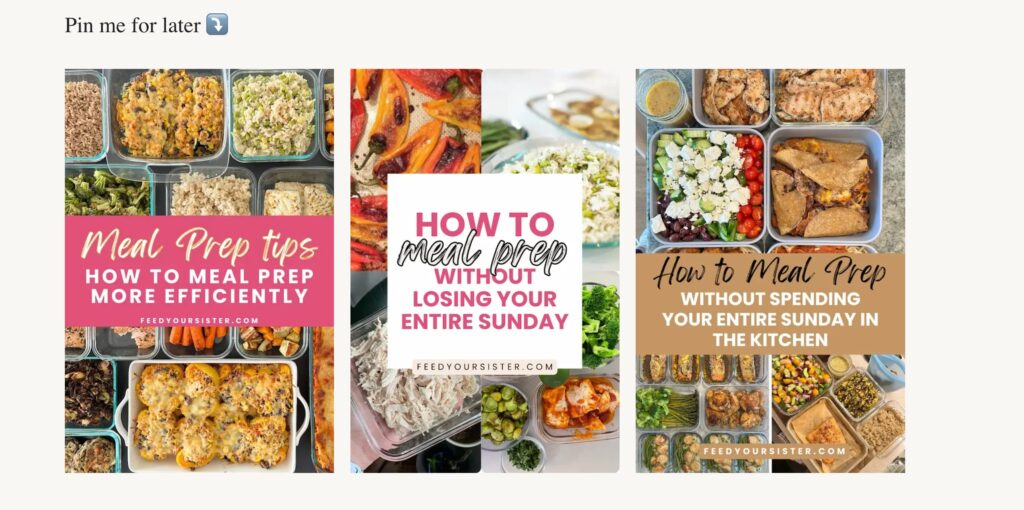
My favorite part of this marketing strategy is that it combined two separate organic marketing platforms and used them in a way that compounded. They fed each other. Each new blog post gave us fresh, search-optimized content to pin, and each pin sent the right audience back to a blog built to answer their exact question.
The Results: Steady, Compounding Blog Traffic
From May 2025 through January 2026, Elia’s organic reach grew steadily:
- 9,550 outbound clicks to her blogs, her meal prep course, and her digital offerings
- 443,000 impressions (the number of times her pins showed up on feeds)
- A total audience of 310,000 (the number of people who saw her content)
Some of that growth came from seasonal pins taking off, which meant that our seasonal strategy was working. Pinterest rewards content that shows up before the searches start. We were pinning back-to-school lunch ideas in June, so her content was already there and already ranking by the time the searches started rolling in.
The blog side of the strategy is doing its quiet work as well. Because of keyword research and writing with user intent in mind, Elia’s summer meal prep post currently ranks #6 on Google, and her content is being pulled into AI-generated search answers.
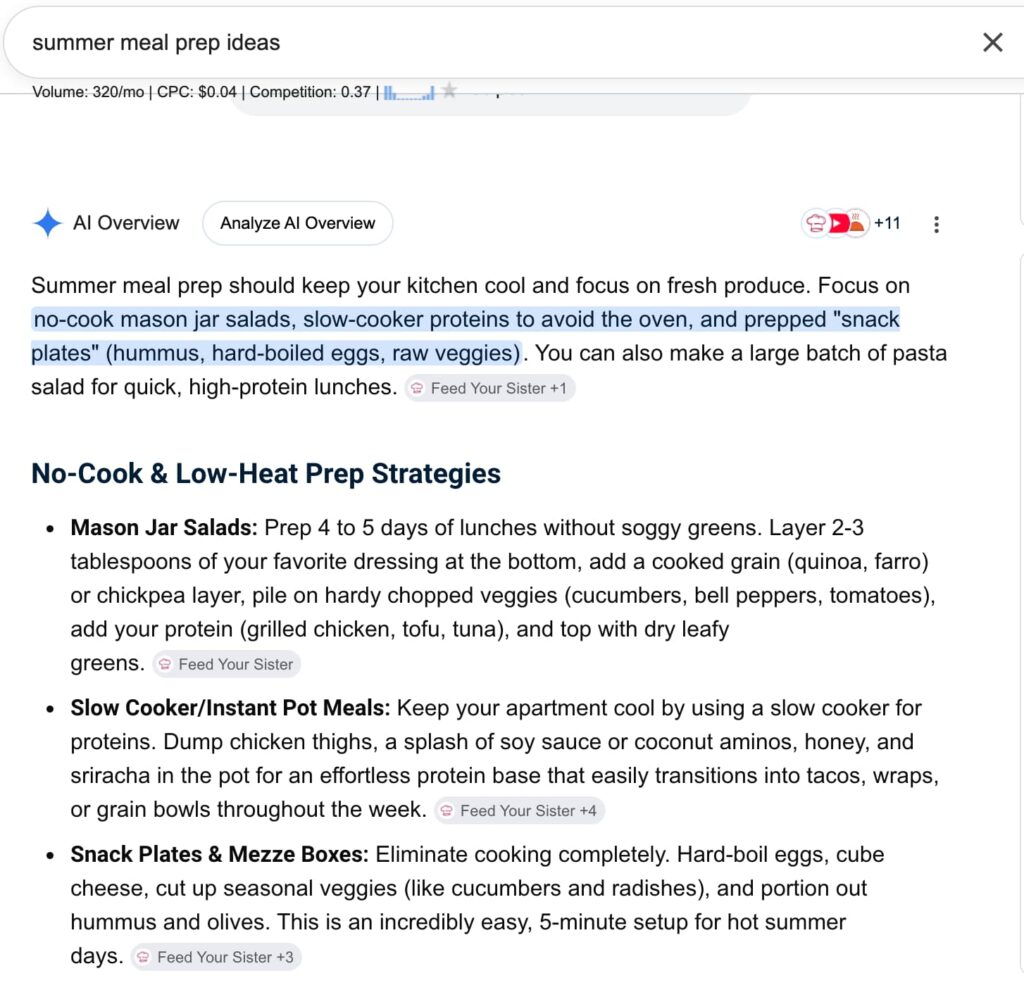
That’s the beauty of writing blogs for real humans to answer real questions (and making sure those blogs are search engine optimized).
What This Meant for Elia
It meant her marketing was working in the background while she stayed focused on her heart work, cooking for families and teaching the skills only she can teach. She didn’t have to be online to be found. Her content was out there doing the finding for her, day after day, whether she was in a client’s kitchen or off the clock entirely.
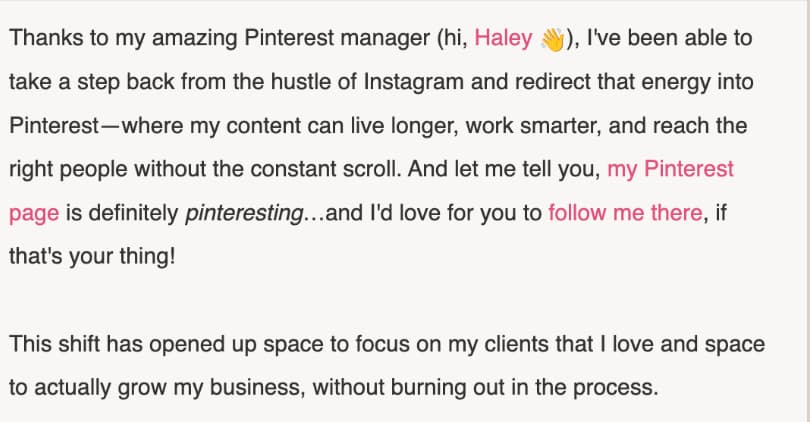
This was a sweet testimonial that she sent out to her email subscribers! ⤵️
Why This Kind of Organic Marketing Strategy Works
Unlike most social platforms, which reward constant activity and disappear within hours, Pinterest and SEO blogging reward strategy and consistency. Both are search-based, which means the content keeps working long after you publish it.
A blog post written to answer a real question can rank for years. The pins pointing to it keep sending fresh readers its way. And because it’s built around what people are genuinely searching for, it shows up at the exact moment someone is looking, no reposting, no pushing, no being online all the time.
What This Could Look Like for You
Elia’s growth wasn’t the result of doing more. It was the result of a strategy (and the right support) working in the background. That kind of visibility isn’t reserved for people with endless time to post. It’s built slowly and intentionally, and it can absolutely be built for your business.
If you’d like to see what that could look like for you, you can explore my Pinterest and blog packages here!


